Putting Your Ground Screw Foundation on Solid Ground
A certified testing laboratory of engineers and technicians — determining on-site ground screw load capacities for residential and commercial projects of any size.
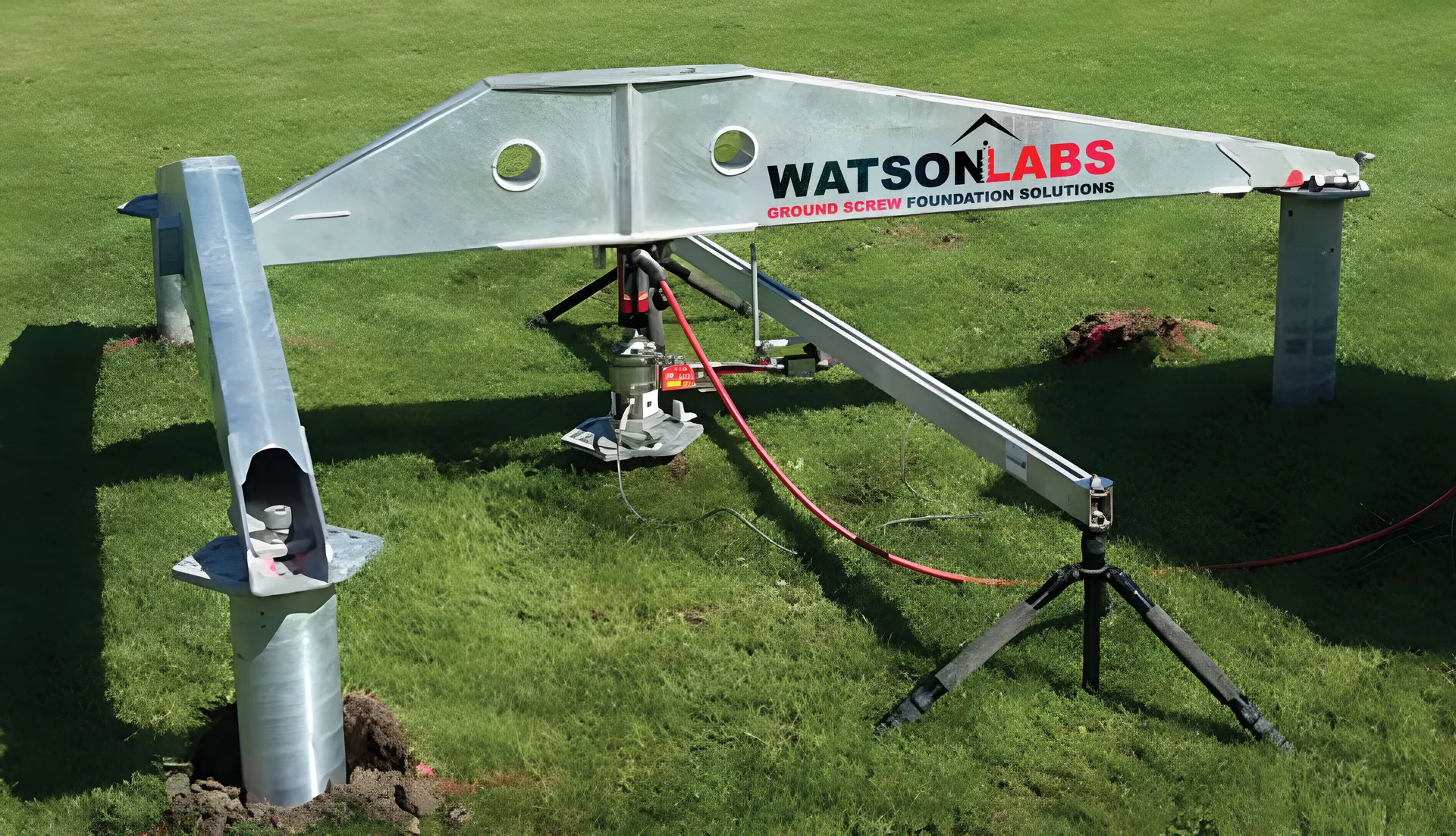
We utilize state-of-the-art testing methodologies to give your project engineers and managers the data they need to create a ground screw foundation specification that delivers safe working-load performance for the life of the structure.
Watson Labs is a division of BDI — the largest domestic manufacturer of ground screws in the industry and a leading fabricator of high-volume tubular parts and welded assemblies since 1946. Our engineer-based team possesses deep knowledge of the materials we work with and the diverse soil conditions and load capacities our ground screws must support.
Many BDI ground screw customers reported the need to validate their ground screw's compressive, tension and lateral loads in their project's local soil conditions. Expert calculation of these load-test factors is vital to determining a structure's ability to deliver its specified performance — and meeting that need was the impetus for creating Watson Labs within our 300,000-square-foot manufacturing headquarters in St. Louis, Missouri.
From Soil Conditions to Certified Capacity
Achieving foundations that meet project specifications and long-term performance goals requires analyzing the soil the structure will encounter and determining the on-site load capacity of the specified ground screws. Watson Labs manages the entire process.

Soil Analysis Partner
We secure a soil analysis partner from our network of geotechnical drilling companies to characterize your site's real conditions.
On-Site Load Testing
Our engineers perform compression, tension and lateral load tests on your ground screws with fully calibrated equipment.
Capacity Report
You receive ultimate pile capacity data, benchmarked against your project's engineering requirements for design and sign-off.
Successful Foundations Begin Below the Surface
Successful ground screw foundations begin with determining the site's soil conditions via geotechnical drilling. While soil conditions are known and predictable in some cases, much of the time data is limited — or absent.
Soil conditions vary widely, and they directly affect a structure's bearing capacity, settlement performance, and stability. Without accurate data, project teams cannot make informed decisions about the proper ground screw foundation specification — imperiling structure safety and long-term stability.
Validated Performance Under Real Conditions
Foundations must support significant axial (compression), tensile (uplift) and lateral loads over decades of continuous operation. On-site load testing validates how a ground screw performs under real conditions — providing data on load-bearing capacity, displacement, settlement, and uplift and lateral resistance.
Once this data is determined, your team has the ultimate pile capacity data to design a ground screw foundation that safely meets the real-world performance needs of your structure.
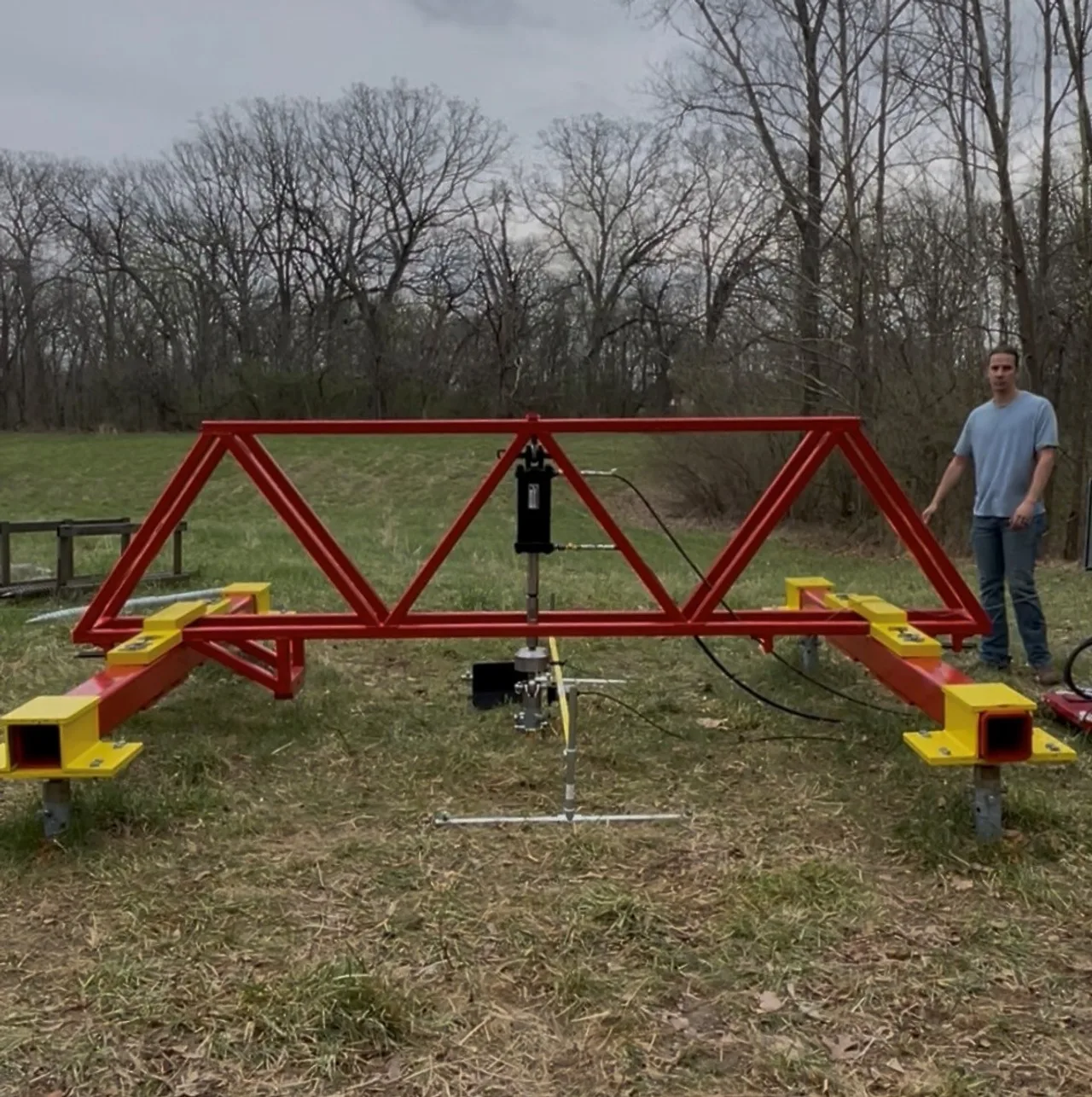
Structured to Recognized ASTM Standards
Our qualified engineers follow structured load-testing protocols with fully calibrated equipment for test accuracy and consistency.
ASTM D1143
Compression
Tests the ground screw's ability to support downward structural weight (axial compression).
ASTM D3689
Tension
An upward pull test measuring uplift and pull-out resistance — especially important in high-wind environments.
ASTM D3966
Lateral
Applies side-to-side force to evaluate the ground screw's horizontal stability and resistance.
Every Test Documented and Defensible
Our QA process ensures every test is documented and shared in a post-test report. Load capacity results can be benchmarked against your project's engineering requirements to confirm suitability and provide validation for engineering sign-off and stamping, insurance and warranty commitments.
Our process removes the guesswork and risk in determining what your ground screws will support in the local soil — providing critical data your project team can analyze for project sign-off and compliance documentation.
- Site attendance with test rigs and calibrated instrumentation
- Installation of test piles with appropriate embedment and torque confirmation
- Application of loads in incremental steps, recorded using dial gauges or LVDTs
- Real-time plotting of load vs. displacement curves
- Preparation of a final performance report
A Faster, Cleaner Foundation Alternative
Ground screws are an innovative alternative to traditional concrete bases for constructing foundations that support numerous structure types. They offer many benefits over concrete foundations: they are faster to construct (requiring no digging or cure period), cleaner, less costly, and both reusable and renewable.
Ground screws consist of galvanized steel pipes with a welded-on thread designed to support horizontal and vertical loads. They are driven into the earth with a ground screwdriver that compacts the soil and creates a frictional connection between the earth and the pipe without displacing the surface. Once installed, structures can immediately be erected.

Schedule a Ground Screw Foundation Consultation
Contact Watson Labs today to put your ground screw foundation on solid ground.